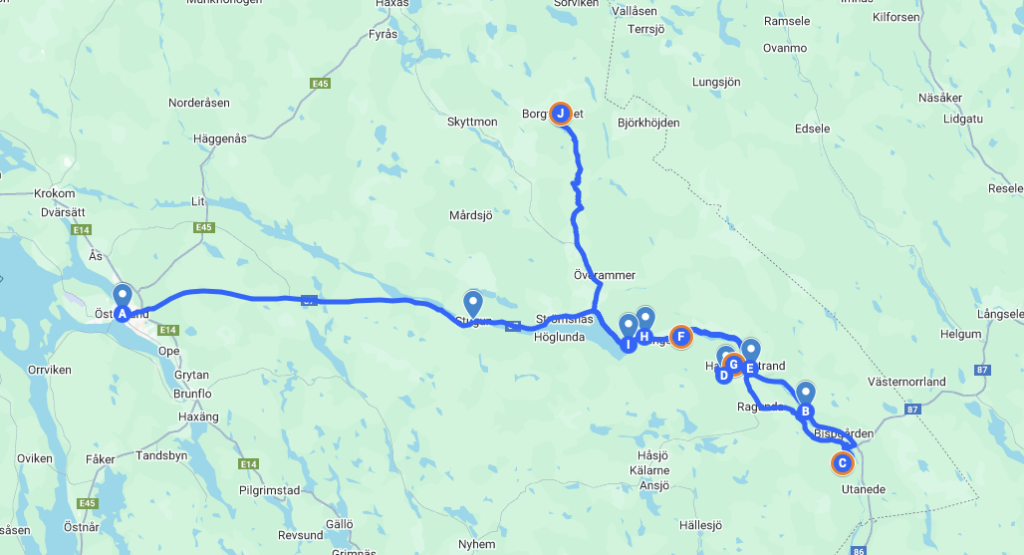
Day 3 – Krångede Museum, Rödhällan, Getryggen Ridge & Stadsberget
Krångede Hydropower Plant was built between 1931–1936 and was the first to transmit electricity from northern Sweden. In the 1940s, it was the largest power station in Sweden.
At Rödhällan, you can still see traces of the old quarry where people once worked to carve millstones by hand. The hard rock was laboriously shaped into heavy stones used in watermills to grind grain into flour. We know that at least twenty pairs of millstones were transported from here in the 1890s.
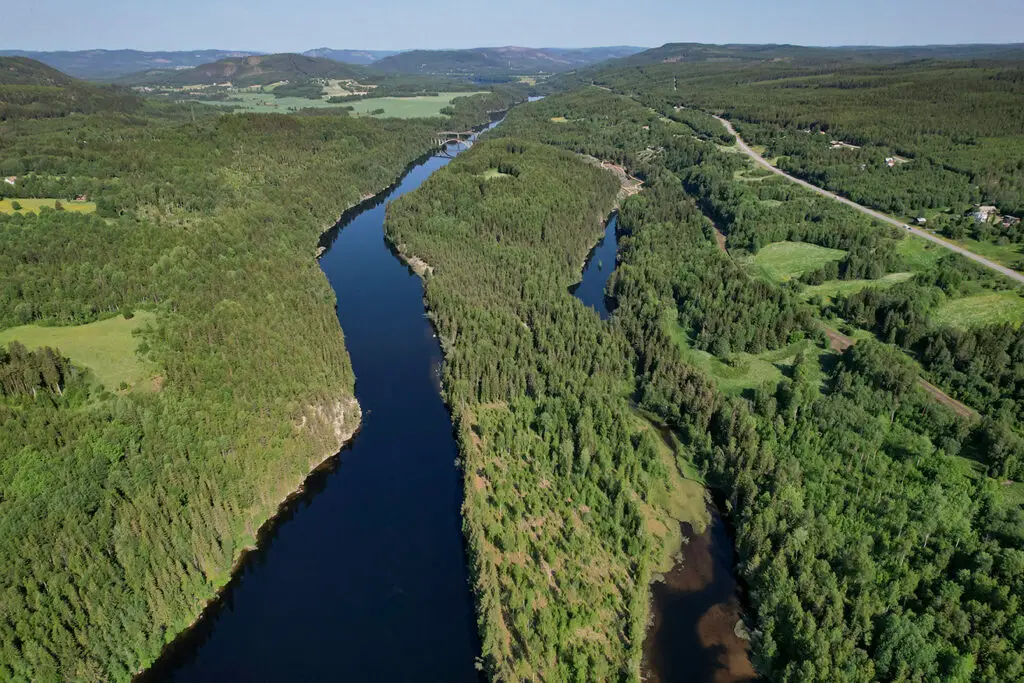
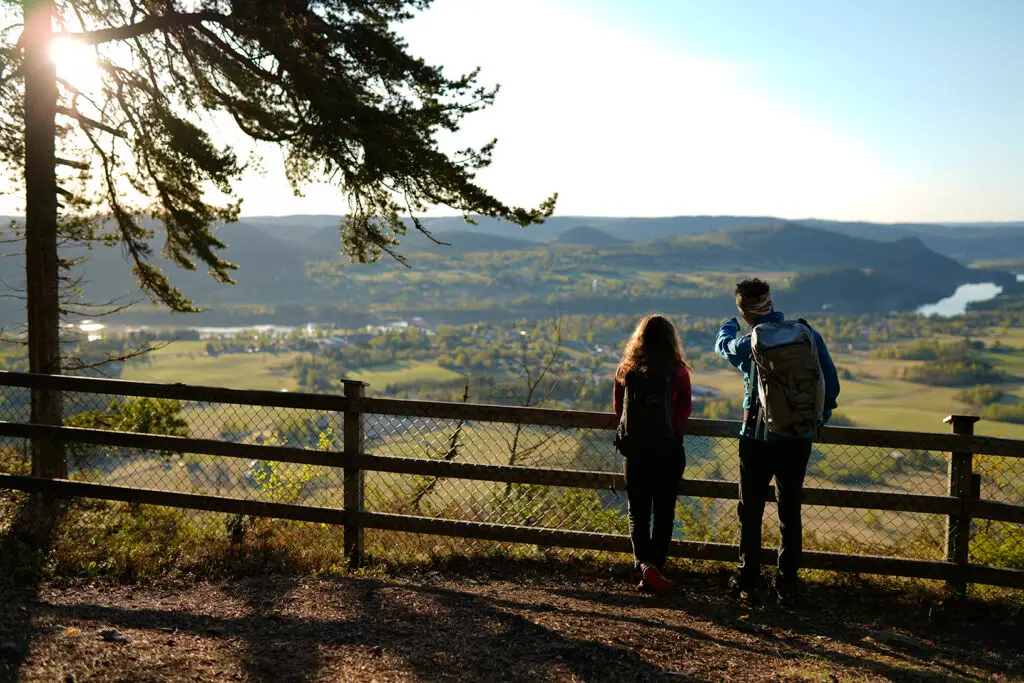
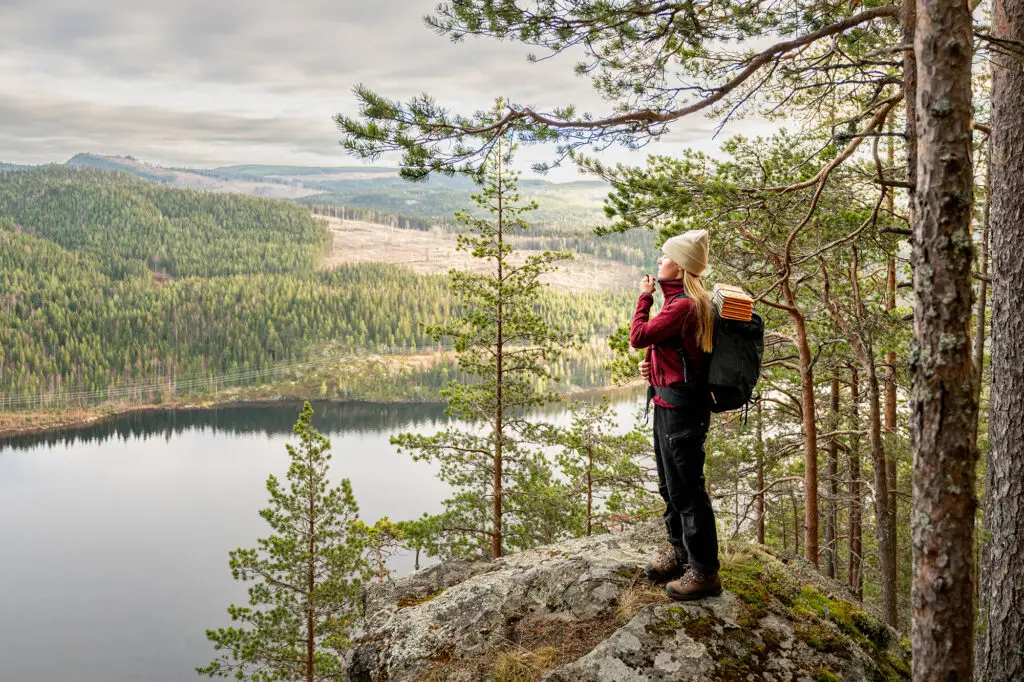
High up on Getryggen Ridge, you can hike along winding trails with beautiful views over the Indalsälven River. The ridge was formed more than 10,000 years ago, when the last inland ice sheet melted and then temporarily stopped its retreat. Meltwater rushed through a tunnel inside the ice, leaving behind gravel, stones, and sand. The tunnel’s shape gave the ridge its characteristic “goat’s back” profile.
At Stadsberget, you can look straight into a 1,500-million-year-old magma chamber – once a massive balloon-like cavity formed when molten rock rose from the Earth’s interior and accumulated several kilometers below the surface. Since then, everything above the chamber has eroded away.
Be sure to also stop by Stugun’s Tourist Information Center, or why not continue your journey with a spooky night in Borgvattnet, home to one of Sweden’s most famous haunted houses.