A bowl for festive occasions
The Ölgås is a part of Swedish food culture and especially so in the north of Sweden. A big bowl was put in the middle of the festive 18th and 19th century table, filled with a drink, often local beer. From this “Ölgås”, beer goose, the drink was poured with spoons or smaller beer geese that could “swim” around the bowl. The smaller beer geese could also go around the company by the table and everyone drank from the same bowl. Much suggests that the Swedish word “lagom” stems from the fact that when you were invited to have a beer from a beer goose, everyone would have to take care for “the whole team” and only have as much to last the whole round.
The swedish term “lagom” – solidarity and sustainability
With the term “lagom” there is a long tradition in Sweden of thinking about your fellow man and ensuring that the available resources are sufficient for all. A reason for the solidarity spell that characterizes Sweden and those living in Sweden. To collectively take responsibility for the common without self-interest and to act considerably for the group’s best interests. The word “lagom” also gives a hint on why Sweden has come so far in terms of sustainability efforts and the prominent endeavors to keep getting better at making available resources last into the future.
A fine “Ölgås” was a sign of prosperity
The Ölgås was made from a natural lump growing on some birch trees. These lumps were hollowed and some of the adjoining tree was shaped into a handle, often in the shape of a bird neck. They were often decorated with artful carvings and painted in elaborate colours. They were treated with linseed oil to last.
Naturally the finer the farm, the finer the beer goose.
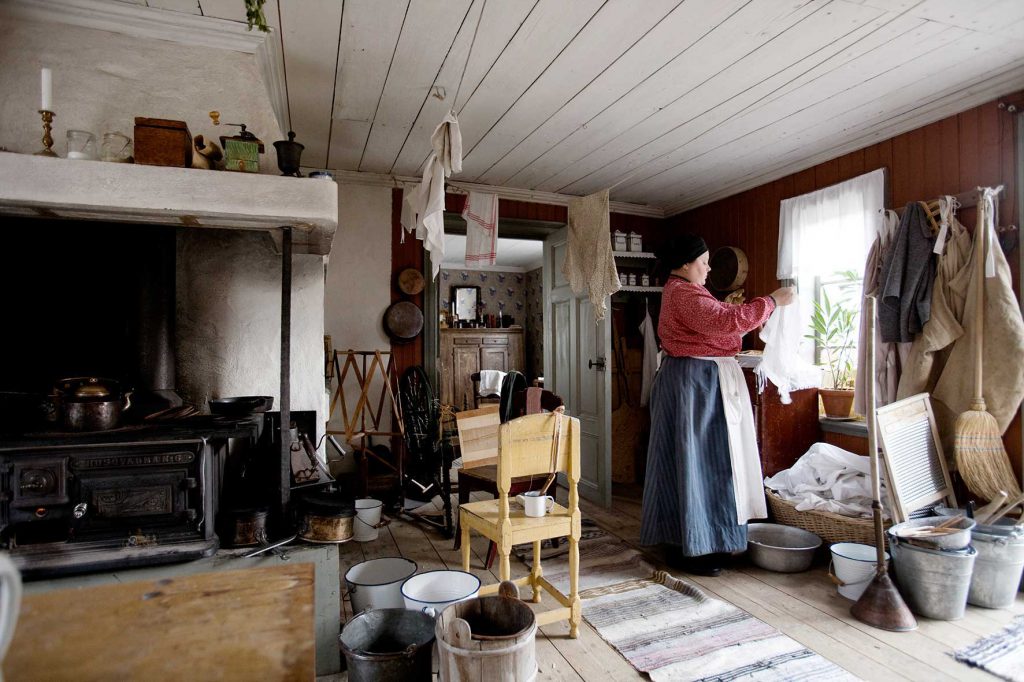
You will find a large number of wooden Ölgäss/beer geese in the collections of Jamtli Museum in Östersund, Sweden. Another fine collection of everyday painted kitchen ware is found at Härjedalens Fjällmuseum in Funäsfjällen.